
Fishing Arcade delivers a vivid underwater shooting experience where reflexes and strategy meet real rewards. Designed for players who enjoy fast-paced action with measurable outcomes, the game blends arcade-style mechanics with calculated risk. On R777, a Bangladesh-focused platform, the title stands out for its smooth performance and transparent payout structure, making it appealing for both beginners and experienced users seeking consistent, trackable gameplay sessions.
Why Fishing Arcade feels different
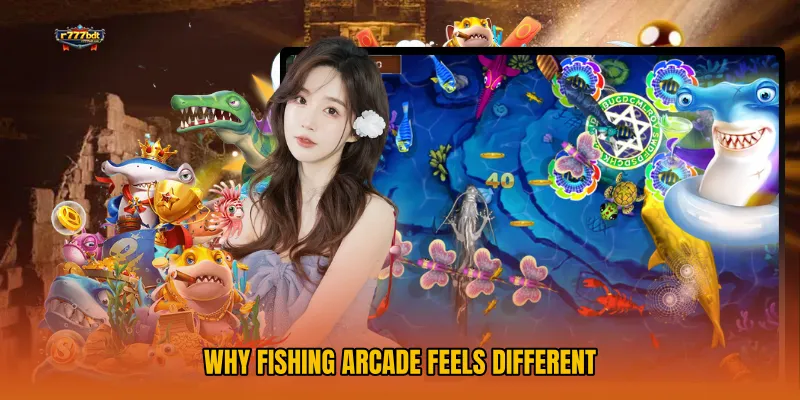
Fishing Arcade is not just another casual shooter; it is structured around probability, timing, and resource control. Players are given a virtual cannon with adjustable firepower, and every shot consumes credits proportional to its strength. The game’s ecosystem includes fish of varying sizes, each assigned a multiplier value, which directly influences the return per successful hit. What makes Fishing Arcade compelling is the balance between randomness and control. While fish movement patterns are dynamic, experienced players quickly learn behavioral loops, enabling smarter targeting over time.
The platform integration with R777 ensures stable latency, which is crucial because even a 0.3-second delay can affect hit accuracy during high-density fish waves. Additionally, the interface displays real-time hit ratios and expenditure, allowing users to adjust their tactics mid-session. Unlike traditional slots, where outcomes are isolated spins, Fishing Arcade creates a continuous engagement loop where each decision compounds the next. This structure encourages disciplined play, where players who manage ammunition and timing effectively often outperform those relying purely on rapid firing.
Core mechanics of Fishing Arcade

Understanding the internal mechanics is essential before diving deeper. Below is a structured overview of how gameplay elements interact:
Weapon scaling and shot efficiency
Before mastering advanced strategies, players need to understand the role of weapon scaling. Each cannon level changes both cost per shot and probability of eliminating a target. Lower levels allow frequent firing but yield smaller returns, while higher levels require precision but can secure high-value targets quickly.
Fish classification and reward mapping
Each fish type follows a predefined multiplier range, though movement and durability vary. The table below outlines typical in-game values:
| Fish Type | Difficulty Level | Multiplier Range | Average Hit Rate | Suggested Cannon Level |
|---|---|---|---|---|
| Small Fish | Low | 2x – 5x | 75% | Level 1–2 |
| Medium Fish | Moderate | 6x – 15x | 50% | Level 2–4 |
| Large Fish | High | 20x – 50x | 25% | Level 4–6 |
| Boss Creatures | Very High | 80x – 200x | 10% | Level 6+ |
This structure shows that Fishing Arcade rewards patience and observation. Players who focus only on high multipliers often exhaust credits quickly, while those balancing targets maintain longer sessions with steadier returns.
Session pacing and resource control
Effective pacing is a defining factor in success. Many players adopt a cycle-based approach:
- Begin with low-power shots to build baseline credits
- Transition to mid-level targets during dense fish waves
- Reserve high-power shots for boss appearances
- Pause briefly after significant wins to reset focus
This cycle helps maintain psychological discipline and reduces impulsive over-spending during intense moments.
Smart strategies to maximize returns in Fishing Arcade
To move beyond casual play, users need structured strategies that align with both mechanics and budget control. The following sections outline practical approaches used by experienced players.
Budget planning using BDT
When playing on R777, setting a clear budget in BDT is crucial. A structured financial plan ensures sustainability and reduces emotional decision-making.
| Budget Tier (BDT) | Suggested Session Length | Risk Level | Recommended Strategy |
|---|---|---|---|
| 500 – 1,000 BDT | 20–30 minutes | Low | Focus on small fish and consistency |
| 1,000 – 3,000 BDT | 30–60 minutes | Medium | Mix medium and large targets |
| 3,000+ BDT | 60+ minutes | High | Strategic boss targeting with controlled bursts |
This approach ensures that Fishing Arcade remains a controlled entertainment activity rather than a high-risk gamble.
Target prioritization techniques
After setting a budget, the next step is choosing targets wisely. Skilled players typically follow these principles:
- Avoid chasing a single large fish repeatedly
- Shift targets when hit rate drops below 30%
- Track movement patterns before increasing firepower
- Use short bursts instead of continuous firing
These techniques improve efficiency and reduce unnecessary credit loss.
Timing and wave analysis
Fish in Fishing Arcade often appear in predictable density waves. Recognizing these patterns allows players to optimize shot timing. High-density waves increase hit probability, making them ideal for mid-level cannons, while low-density periods are better suited for conserving resources.
Psychological discipline during play
One of the most overlooked aspects is emotional control. Players often increase bet size after losses, which disrupts strategy. Maintaining a consistent firing pattern and sticking to pre-set limits ensures long-term stability.
Advanced play insights for consistent results
For those aiming to refine their gameplay further, advanced techniques can significantly improve outcomes. These methods require observation, patience, and adaptability.
Adaptive cannon switching
Instead of sticking to a single cannon level, experienced players switch dynamically based on screen activity. For example, when multiple medium fish cluster together, increasing cannon level briefly can yield multiple hits in a short time frame.
Hit probability tracking
Tracking hit probability manually or mentally can provide an edge. If multiple shots fail consecutively, it often indicates a low-probability phase. Reducing firepower or pausing briefly can prevent unnecessary losses.
Multiplayer interaction effects
In shared sessions, other players’ shots influence fish health. This creates opportunities:
- Target fish already under attack to save credits
- Observe high-level players’ targeting choices
- Avoid overcrowded targets with excessive competition
This interaction adds a layer of strategy unique to Fishing Arcade, making it more dynamic than solo-based games.
Long-session sustainability
Players aiming for extended sessions should focus on consistency rather than high-risk plays. Maintaining a steady hit ratio above 45% often results in gradual but reliable gains. Over time, this approach proves more effective than sporadic high wins followed by losses.
Conclusion
Fishing Arcade offers a balanced mix of skill, timing, and strategic planning, making it more engaging than typical arcade-style games. With structured budgeting, smart targeting, and disciplined gameplay, players can significantly improve their outcomes while enjoying the immersive underwater environment. If you are looking for a game that rewards both patience and precision, now is the time to explore it and start your journey on TAKABET.


